

People rarely hand money to a business they know nothing about. Before they buy, book or hire, they look for proof that other customers were happy, and reviews are the quickest proof to find. This guide explains why reviews build trust, where to collect them, how to ask without breaking platform rules, how to reply to praise and criticism, and what is changing as regulators and platforms crack down on fake feedback.
Why Reviews Carry So Much Weight
A review is a stranger describing what it was like to deal with a business. Because it comes from a customer and not from the company, it gets more attention than anything written on your own site. BrightLocal's 2026 Local Consumer Review Survey, which polled adults in the US, found that 97% of consumers read reviews for local businesses. It covers one country, so use the number as a sign of direction, not as a global figure. If you want a closer look at a single market, our article on why online reviews matter for businesses in Pakistan does exactly that.
The idea behind this is social proof: when people are unsure, they follow what others have done. A business with plenty of detailed, recent reviews gives a new visitor something to lean on. A business with none asks the visitor to take its word for it.
Why trust is harder to win than it used to be
- More choice. A competitor is one search away, so a polished website no longer settles the question by itself.
- Doubt about advertising. Shoppers know brands control their own messages, so they look for voices the brand does not control.
- Fear of scams. Unfamiliar sellers, payment fraud and misuse of personal data make people check what other buyers say before they commit.
What Makes a Review Believable
Not every review builds the same amount of trust. Readers look for small signs that the person was real and the experience was genuine.
- Specific detail. "The order arrived two days early and the packaging was solid" tells a reader far more than "Great service."
- A natural spread of ratings. A page of nothing but perfect scores can look curated. A few four and three star reviews, answered sensibly, usually read as more honest.
- Recent dates. Buyers want to know how you are doing now, not three years ago.
- Owner replies. They show that a real person reads the feedback.
- More than one source. Reviews on a few independent platforms are harder to dismiss than testimonials on your own website.
Where to Collect Reviews
There is no single correct platform. Choose according to where your customers actually look, and treat each one as a separate channel with its own rules. BrightLocal's 2026 survey reports that consumers use an average of six review sites, so one profile is rarely the whole picture.
| Platform | Suits | Worth knowing |
|---|---|---|
| Google Business Profile | Local and service businesses found through Google Search and Maps | Customers need a Google Account to post. Google says more reviews and positive ratings can help local ranking, and it prohibits incentives for reviews. |
| Trustpilot | Online shops and consumer-facing companies | Its guidelines ask businesses to invite customers consistently, good experience or bad, and not to offer incentives. |
| Clutch | B2B service providers such as agencies and developers | A directory of B2B service providers where buyers can share their experience. |
| Clutchpilot | Businesses that want a profile in a review directory | According to its site, a basic profile is free, with optional paid features, and clients can leave a review through an online form. |
| Yelp | Restaurants and local services in markets where it is popular | Its guidelines say businesses should never ask customers to write reviews, so you rely on customers finding you. |
| Industry directories | Niche sectors with their own listings | Check how each one verifies reviews and what it allows before you invest time. |
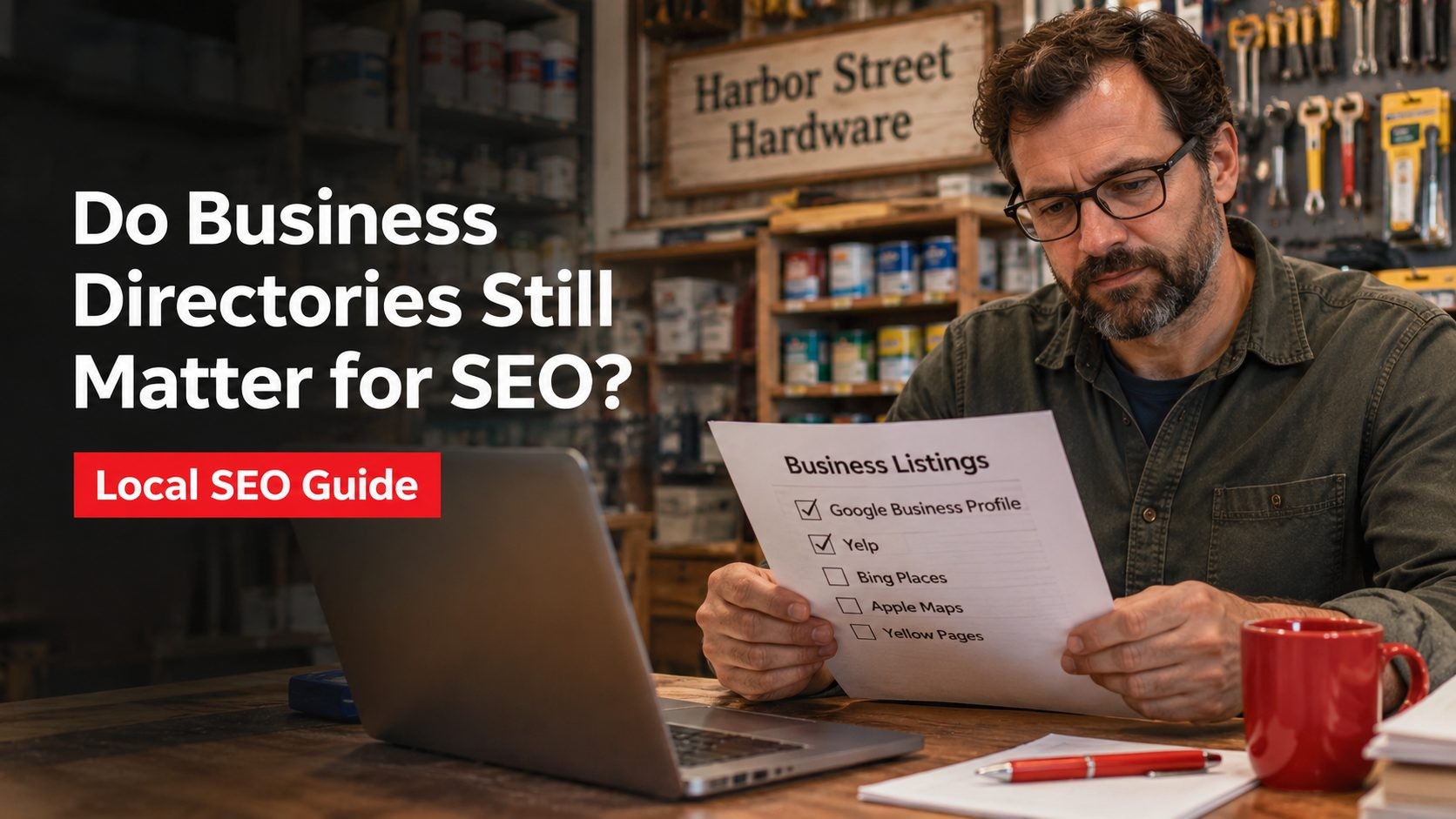
To see how directories fit into search and credibility, read our guides to business directories and SEO and Google Business Profile optimization.
Testimonials on your own website still help visitors, but they work as a supplement. Google's review snippet guidelines say that when the business controls the reviews about itself, the page is not eligible for star review snippets, and that ratings must come directly from users.
How to Ask for Reviews Without Breaking the Rules
Most platforms want honest reviews that reflect a real experience. Asking well gets you more of them, and asking badly can get your listing penalized.
- Ask when the experience is fresh. Send the request soon after delivery, completion or the final meeting, once the customer has actually used what they bought.
- Make it one click. Google lets you share a review link or QR code, so customers do not have to search for your listing.
- Ask everyone. Picking out only the customers you expect to be happy skews the picture, and Trustpilot's guidelines specifically ask for consistent invitations.
- Keep the wording neutral. "Tell us how it went" is better than "Please leave us five stars."
- Never pay for an opinion. Google calls free or discounted goods or services in exchange for reviews "strictly prohibited," and Trustpilot also bans incentives.
- Check each platform first. Rules differ, and Yelp, for example, takes a different view on asking than Google does.
A note on fake and bought reviews
In the United States, the Federal Trade Commission's rule on consumer reviews and testimonials has been in force since October 21, 2024. According to the FTC, it bans fake and AI-generated reviews, paying for reviews that state a particular sentiment, and using unfounded legal threats or intimidation to stop negative reviews. It is a US rule, but the safe approach is the same everywhere: ask for honest feedback and never pay for a specific opinion.
Replying to Reviews
Replies matter because they are public. BrightLocal's 2026 survey found that 89% of consumers expect business owners to respond to reviews. Google's own advice is to keep replies professional, short and relevant, to avoid personal attacks, and to avoid using replies to promote offers.
Replying to praise
Thank the reviewer, mention one detail they raised, and stop. The same line pasted under every five-star review reads as automatic, and Google recommends personal replies.
Replying to criticism
- Thank them for the feedback, even if it stings.
- Acknowledge the specific problem in plain words.
- Apologize where you were at fault, and do not take blame for things outside your control.
- Offer a next step, and move the details offline so personal information stays private.
- Follow up. If the issue is fixed, the reviewer may choose to update their review, but that is their decision.
A short example: "Thank you for telling us about the late delivery. That is not the standard we aim for. Please message us your order number using the contact details on our profile and we will look into it today." It names the problem, avoids excuses and gives a clear next step. Later readers often judge how you handle trouble more than the complaint itself.
Review Tools: What to Look For
A spreadsheet and Google's review link are enough to start. As volume grows, a tool can save time, but judge it by the following points.
- Request automation. It should send requests after a purchase or finished project and treat every customer the same.
- Alerts. A notice when a new review arrives lets you reply while the customer is still paying attention.
- Theme tracking. Sorting feedback into topics such as delivery, price or staff shows what to fix first.
- Multi-platform view. Seeing Google and other sources in one dashboard saves logging in everywhere.
- Rule compliance. Avoid anything that hides unhappy customers from review requests or promises rewards for ratings.
Put Reviews to Work
- Show them near decisions. Place a few relevant reviews on the pages where visitors choose, such as pricing, booking or checkout, and link to your full profile so people can read the rest.
- Use them in proposals. A short, relevant quote beside a project description supports your claim. Get permission before naming a client.
- Close the loop. When feedback points to a recurring problem, fix it and say so publicly. That shows reviews change what you do.
- Build the basics around them. A secure site, real contact details and clear policies make reviews more convincing, because visitors can see there is a real business behind them.
What Is Changing
You do not need predictions to see the direction. Fake reviews, including AI-generated ones, now face formal rules in the US. Consumers read reviews in more places, so a single profile is rarely enough. And most people expect a reply from the owner. Collecting honest feedback steadily and answering it openly suits all three trends.
Quick checklist
- Claim and complete your Google Business Profile.
- Pick two or three more platforms that match your customers.
- Create one review link or QR code and put it in follow-up messages.
- Ask every customer, in neutral wording, and never offer rewards.
- Reply to every review within a few days.
- Review the themes each month and fix one recurring problem.
Related reading: how businesses grow with review platforms.
Frequently Asked Questions
No Tags

Comments (0)