

- Updated
- Digerati
- Tips & Tricks
- 646
- 0
Visibility gets someone to your door, but it rarely decides whether they walk in. Before they call or fill in a form, most people check what other customers say, whether your hours and address look right, and whether you appear on more than one site. Business directories and review platforms sit right in that checking step. This post covers why they still matter for trust and visibility, what the evidence actually supports, and how to choose where to list. If you want the history and the recent platform changes first, read how directories are changing digital marketing.
Why Listings and Reviews Still Matter
A listing does two jobs. It helps people find you where they already search, such as Google Search, Google Maps, Apple Maps and Bing. It also gives them a source about you that you do not fully control: details a platform has checked, and reviews written by customers rather than by you.
The research on reading habits is consistent. BrightLocal's Local Consumer Review Survey, published in February 2026 and based on 1,002 US adults, found that 97% of consumers read reviews for local businesses and that the average person uses six review sites. It also found that 74% only consider reviews from the last three months. This is self-reported behavior from one survey, so read it as a guide to habits, not a promise of results.
Search visibility is the second reason. Google says local results are based mainly on relevance, distance and prominence, and that prominence depends partly on how many reviews a business has and how many websites link to it. Its guidance also states that more reviews and positive ratings can help your local ranking. Google does not publish how much each factor counts, and nobody outside Google can give you an exact weighting. What you can say safely is that it names reviews and accurate details as inputs.
What a directory is not is a shortcut. Mass submissions to hundreds of sites rarely help, and directory links should not be your link-building plan. The guide to business directories and SEO explains which parts of directory SEO still hold up and which are myths. For a wider view of how local results differ from ordinary organic ones, Search Engine Land has a guide to local versus traditional SEO, and a regional angle on the same subject is in our piece on why online reviews matter for businesses in Pakistan.
The Trust Signals a Listing Can Give
Accurate, consistent details
Google warns that inaccurate business information may stop a profile from showing for relevant searches. The same logic applies across your other profiles. If your phone number differs on three sites, a customer cannot tell which one is current, and a search engine has the same problem. Choose one version of your name, address and phone number and copy it exactly.
Verification
On Google, you must verify your Business Profile before it can appear on Search and Maps. Verification is how a platform confirms that the person editing a profile really runs the business, and other platforms have their own methods.
Reviews from real customers
Volume, recency and tone all count with readers. BrightLocal's survey found that 89% of consumers expect business owners to respond to reviews. Google's own advice is to keep replies polite, short and specific rather than generic, and to move complicated problems to phone or email. A calm, factual reply to a bad review can show a reader how you handle problems.
A complete profile
Google says complete, detailed information helps a profile match what people are searching for. Fill in categories, services, hours, photos and a link to the most relevant page.
Playing by the Review Rules
Reviews only help while they are genuine. In the US, the FTC's rule on consumer reviews and testimonials took effect in October 2024. According to the FTC announcement, it bans fake or false reviews, paying for reviews that express a particular sentiment, undisclosed insider reviews, and suppressing negative reviews through groundless threats. It also lets the agency seek civil penalties against knowing violators.
Platforms add their own rules, and they are not identical:
- Google lets you ask customers for reviews, including through a link or QR code, but not offer incentives and not ask only the happy ones. Its policy on fake engagement also covers paid reviews.
- Yelp takes a stricter line. Its guidelines say businesses should never ask customers to write reviews.
- Other platforms set their own terms, so read them before you send a single invitation.
In practice, that means a neutral invitation after the job is done, sent to every customer rather than a hand-picked few, with no payment or discount attached, and never on a platform that asks you not to. Reply to what comes back. Our guide to building trust online with reviews goes deeper on wording.
How to Choose Where to List
You cannot be everywhere, and you do not need to be. Judge each platform against these questions:
- Do your customers use it? Ask new customers how they found you.
- Does it fit your kind of business? A local trades company, an online shop and a B2B agency reach different audiences.
- Can you verify and edit your own profile? If you cannot correct a wrong phone number, move on.
- What is free and what is paid? Many platforms offer a free profile and sell upgrades such as advertising or analytics. Decide in advance what, if anything, you will pay for.
- How are reviews handled? Look for clear rules, moderation and a way to reply.
- Does it appear for your category and city? Search the way a customer would. The sites that fill the first results are where people will land first.
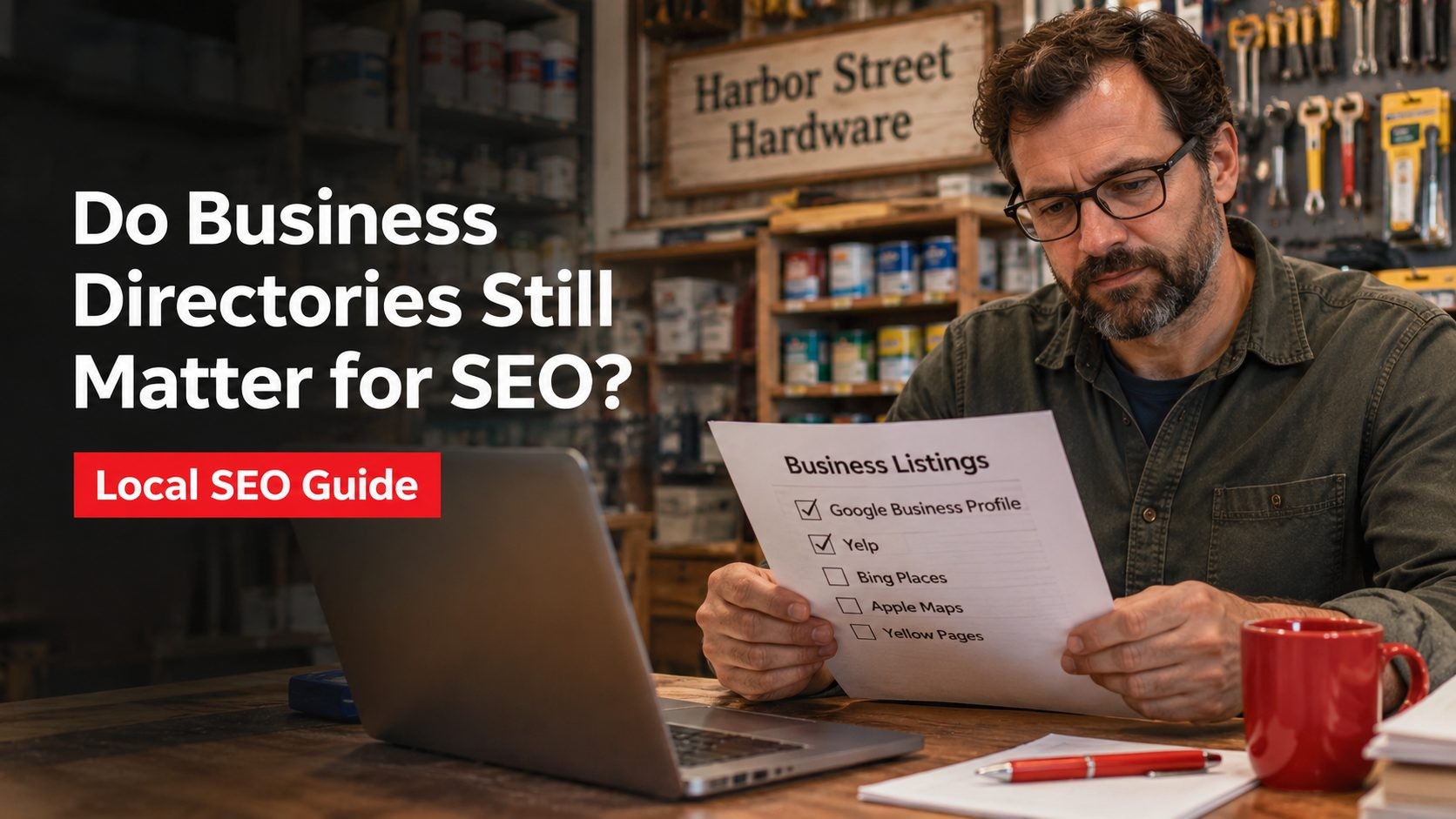
Here is a brief, even-handed look at common options. Each name links to the platform's own page, so you can read its current terms.
| Platform | What it is | Worth a look when | Check first |
|---|---|---|---|
| Google Business Profile | Business profile shown in Google Search and Maps | You serve customers in a place or service area | Verification is required, and Google's review policy applies |
| Bing Places | Free listings in Bing search results and Bing Maps | Your Google profile is already accurate | Microsoft says you can import from Google, so review the imported details |
| Apple Business Connect | Free tool for place cards in Apple Maps, Siri, Wallet and Messages | Your customers use iPhones and Apple Maps | Claim the location, then confirm hours and contact details |
| Yelp | Consumer review site | You run a restaurant, shop or local service | Its guidelines say businesses should never ask customers for reviews |
| Trustpilot | Review platform with invitation tools | You sell online or deliver a service customers review | It offers a free account to start, so check its pricing page for paid features |
| Better Business Bureau | Business profiles and an accreditation program | Your customers know and look for the BBB | Accreditation is an application, so read the terms and costs on its site |
| Clutchpilot | Business directory and review platform | You offer services and want a category listing | Its site describes a free listing with optional paid upgrades; ask how reviews are verified |
Start with the core map platforms, since they are free and feed the places customers look first. Add one or two review platforms that suit your market, then an industry or local directory if your customers use one. A handful of accurate, active profiles is easier to maintain than twenty neglected ones,.
A Simple Routine to Keep Listings Trustworthy
- Search for your business name, phone number and address, and list every profile you find, including old ones.
- Write one master record with your legal name, address, phone, website, hours, categories and a short description.
- Claim and verify each profile you keep, correct it to match the master record, and ask for duplicates to be removed.
- Add real photos and a clear list of services, with the same description everywhere.
- Set a review routine: one neutral invitation after each job, and a reply to every review within a few days.
- Check every profile each quarter, and straight after any change of hours, address or phone number.
For the Google side in detail, follow the Google Business Profile optimization guide. How listings and local search support each other is covered in how local SEO and business listings work hand in hand.
Mistakes That Cost You Trust
- Fake or purchased reviews. They break platform rules and, in the US, can break FTC rules. They are also easy to spot when every review sounds alike.
- Review gating. Sending happy customers to the public review page and unhappy ones to a private form goes against Google's rule on selectively soliciting positive reviews.
- Ignoring negative reviews. An unanswered complaint tells readers nobody is watching.
- Relying on one platform. If its rules change, you have nowhere else to point customers.
Trust Is Built Slowly
Directories still matter because they put checkable information about you in places customers already trust more than an advert. They work best when the details are accurate, the reviews are real and someone actually looks after the profiles. For the client side of this, read why verified business listings build stronger client relationships.
Frequently Asked Questions
No Tags

Comments (0)